
|
ANITA GOODESIGN | Anita's Tutorials Machine Embroidery Thread Choosing the perfect thread for every project — one spool at a time |
|
SKILL LEVEL Beginner Friendly |
THREAD TYPES 8 Varieties |
FOCUS Thread Selection |
|
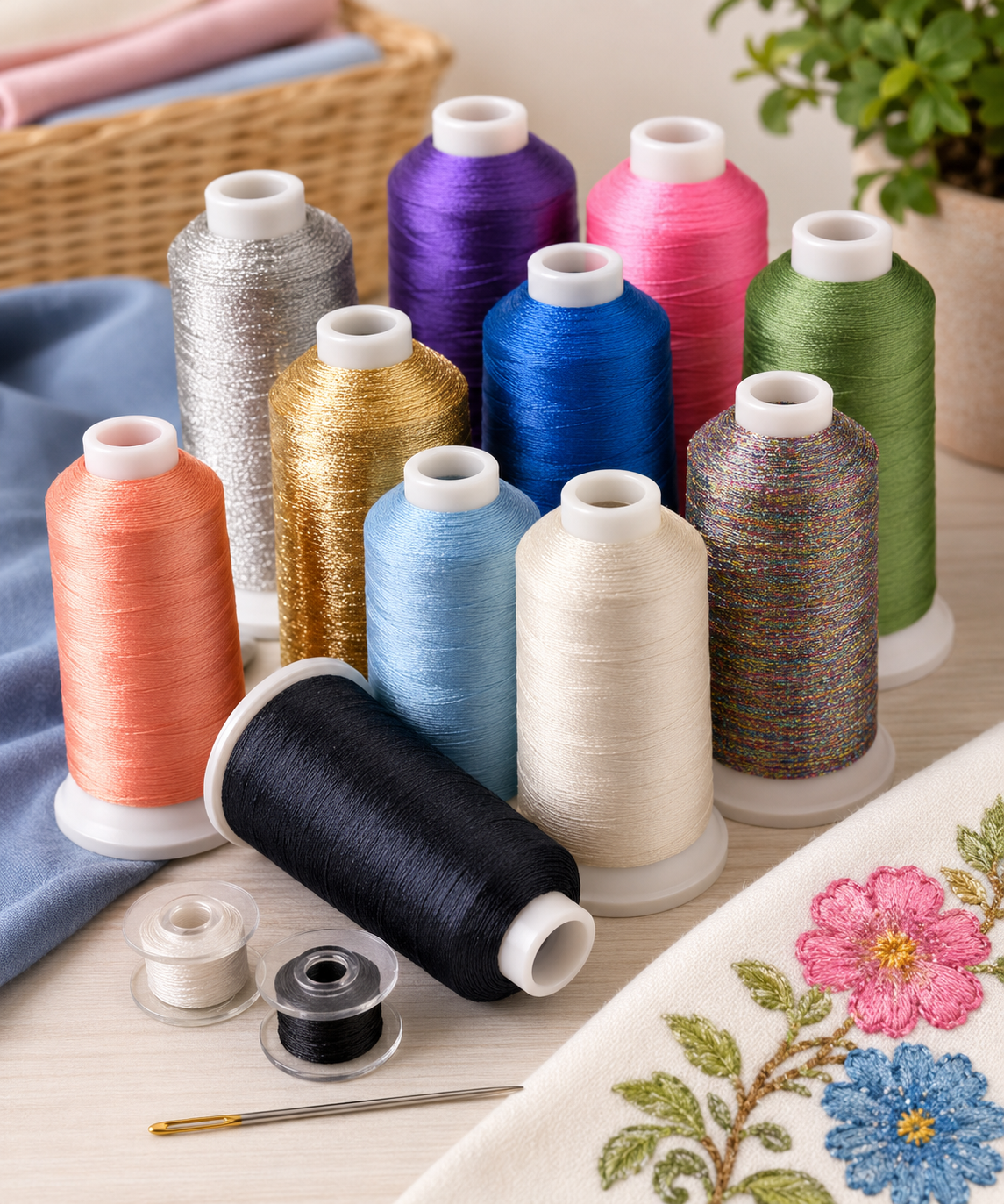
Choosing the right thread can feel overwhelming, but it's one of the most important steps in getting the results you want. For the majority of our work we reach for 40 weight polyester because of its versatility and durability — yet we love exploring the wide world of specialty threads, each bringing its own texture and finish to a design. The best thread always depends on your project. The fabric you're stitching, the density of the design, and the overall look you're after all play a part. From soft cotton for a matte finish to specialty threads that add a touch of shimmer, the possibilities are endless. Use this guide to navigate thread selection with confidence and elevate every finished piece. |
MATERIALS LIST |
◆ 40 wt polyester thread (the versatile, all-purpose standard) |
◆ Rayon thread — for vibrant color and high sheen |
◆ Cotton thread — for a soft, matte finish |
◆ Metallic thread — for shimmer and shine |
◆ Heavyweight thread — for bold, high-impact designs |
◆ Nylon thread — for strength and durability |
◆ Bobbin thread — for clean stitching underneath |
◆ Glitter (specialty) thread — for a sparkling finish |
◆ Embroidery needle sized to match your thread weight |
1 |
Rayon Thread Rayon is prized for its brilliant color and soft shine, making it a favorite when you want your stitching to really stand out. Characteristics: Vibrant colors and a high sheen, with a smooth, silky texture. Best uses: Designs can be kept in physical form (binders with printed designs) or in digital form (software or cloud storage). Weights: Typically 40 wt (the standard) and 30 wt for thicker, bolder designs. Applications: Ideal for detailed work on shirts, table linens, and quilts, and for machine embroidery on fashion items where embellishment is key. |
| |

2 |
Polyester Thread Polyester is the studio's everyday workhorse — tough, reliable, and available in a huge range of colors that stay bright wash after wash. Characteristics: Durable, moisture-resistant, and colorfast, with a smooth finish and often a slight sheen. Best uses: Versatile for a wide variety of projects, including sportswear, outdoor gear, and home textiles. Weights: Most commonly 40 wt, with 30 wt (thicker) and 50 wt (finer) also available. Applications: Ideal for activewear, team jerseys, outdoor flags, and durable home goods like pillow covers and curtains. |
| |

3 |
Cotton Thread Cotton gives a soft, natural, matte look that feels right at home in traditional and heirloom projects. Characteristics: Soft natural fibers with a matte finish and excellent absorbency. Best uses: Well-suited to quilting, heirloom projects, and general-purpose embroidery. Weights: Usually available in 40 wt and 50 wt, and occasionally 30 wt. Applications: Often used in quilting, decorative stitching on garments, and vintage-style embroidery where a classic touch is desired. |
| |

4 |
Metallic Thread Metallic thread adds instant sparkle and shine, turning an ordinary design into an eye-catcher. It's a little more delicate, so slow, steady stitching helps. Characteristics: Glossy, shiny, and reflective — and more delicate than everyday threads. Best uses: Used for decorative accents that make a design shimmer and stand out. Weights: Typically 30 wt, though lighter and heavier options may exist. Applications: Great for holiday decorations, logos on uniforms, embellishments on quilts, and eye-catching details on evening wear. |
| |

5 |
Heavyweight Thread When you want a design to make a bold statement, heavyweight thread delivers thick, high-impact stitches. Characteristics: A thicker, robust thread built for bold designs. Best uses: Ideal for designs that need to stand out significantly, such as logos or text. Weights: Commonly found in 30 wt. Applications: Used extensively in branding — company logos on uniforms or promotional materials where visibility is important. |
| |

6 |
Nylon Thread Nylon is the tough, flexible choice for projects that take a beating and still need to hold together. Characteristics: Strong, flexible, and resistant to abrasion, often with a slight sheen. Best uses: Best for heavy-duty projects where strength and durability are required, such as outdoor and industrial applications. Weights: Typically available in weights ranging from 40 wt to heavier options. Applications: Ideal for upholstery, outdoor gear, and items like backpacks or luggage that face constant wear and tear. |
| |

7 |
Bobbin Thread Bobbin thread works quietly behind the scenes, sitting in the lower part of your machine to keep the back of your embroidery clean and tidy. Characteristics: A lightweight thread designed for the lower stitching in embroidery. Best uses: Essential for stabilizing the fabric while keeping the underside neat. Weights: Typically around 60 wt. Applications: Used specifically in machine embroidery as a back-up thread to ensure clean finishes on the underside of stitched designs. |
| |

8 |
Glitter Thread Glitter thread brings the sparkle — its shimmering finish is made for festive and special-occasion projects. Characteristics: A specialty thread featuring glitter particles or metallic coatings that create a sparkling effect. Best uses: Used for decorative embroidery to add a shimmering finish, often in festive or special-occasion projects. Weights: Generally around 30 wt, though density may vary by brand. Applications: Often seen on holiday decorations, dance costumes, and festive apparel, enhancing eye-catching designs. |
| |

THREAD WEIGHTS AT A GLANCE |
◆ 30 wt — Heavier thread, ideal for bold designs, decorative applications, and heavy-duty projects. |
◆ 40 wt — The standard weight for most embroidery; suitable for general-purpose, versatile use. |
◆ 50 wt — A lighter weight for detailed work, finer designs, and quilting. |
◆ 60 wt — Very fine thread, often used for invisible stitching, delicate applications, and bobbin work. |
|
💡 PRO TIP When you're not sure where to start, reach for 40 weight polyester — it's the studio's everyday workhorse: versatile, durable, and forgiving across the widest range of projects. Once you're comfortable, branch out into specialty threads like metallic and glitter to add texture, shine, and personality to your designs. |
|
Now You're Ready to Choose with Confidence! Making informed thread choices will elevate every design — mix, match, and let each project shine. |
Machine Embroidery Thread | Anita's Tutorials | Anita Goodesign