|
ANITA GOODESIGN | Anita's Tutorials Choosing the Right Embroidery Machine for Your Studio Understanding machines, features, and what matters most for your embroidery journey |
So you're ready to invest in an embroidery machine. The question isn't whether embroidery machines are worth it — it's which one is right for you. There are three main categories of machines, each with distinct strengths, and after 30 years in the embroidery business, I've stitched designs on dozens of different models. Let me help you navigate the options. |
The Three Main Machine Types
Embroidery machines fall into three distinct categories, and understanding the differences is key to making the right choice for your studio.
1. Single Needle Home Machines
These are the workhorse machines for many embroiderers. They handle both embroidery and sewing, making them incredibly versatile for anyone who likes to piece together quilt blocks on the same machine they use for embroidery.
2. Multi-Needle Home Machines
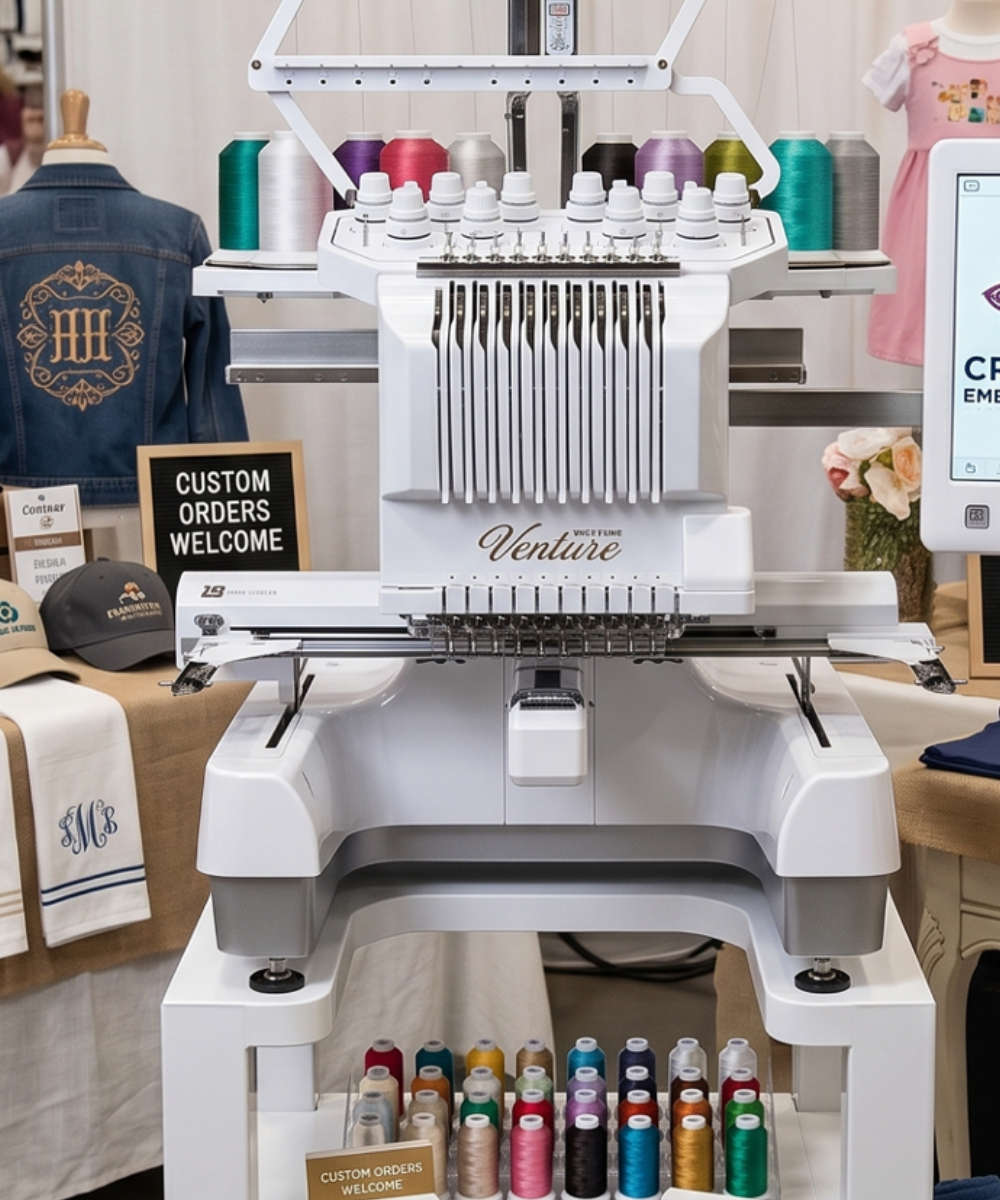
With multiple needles (typically 6 to 10), these machines stitch faster because you don't have to rethread between color changes. They can handle tubular garments and baseball caps, opening up more creative possibilities.
3. Industrial Machines
These are the powerhouses — bigger, stronger, and built for production. They can handle large hoops (up to 21"x40"), difficult materials like varsity jackets, and feature multiple needles (up to 18). They're for serious production work.
Feature Comparison Chart
Here's a quick reference comparing the key features across all three machine types:
Feature |
Single Needle |
Multi-Needle |
Industrial |
Embroidery |
Yes |
Yes |
Yes |
Sewing |
Yes |
No |
No |
Tubular Garments |
No |
Yes |
Yes |
Baseball Caps |
No |
Yes |
Yes |
Max Hoop Size |
12\"x18\" |
11\"x18\" |
21\"x40\" |
Speed |
Slowest |
Medium |
Fastest |
Price Range |
$1k–$20k |
$1k–$20k |
$7k–$15k+ |
Going Deeper: Key Considerations
Does the Machine Quality Really Vary?
Here's the honest truth: after 30 years of embroidery, if you stitched the exact same design on 20 different machines and showed them to me without telling me which was which, I couldn't tell you which machine made which stitch. The stitch quality is remarkably consistent across all three machine types. So don't choose based on the assumption that one produces better stitches than another — they don't.
What Actually Matters: Speed, Capacity, and Features
The real differences come down to four things: speed, hoop size, built-in features, and the ability to handle difficult materials.
Understanding Speed: It's More Than Stitches Per Minute
When a manufacturer says a machine runs at 1,200 stitches per minute, many people assume that means 6,000 stitches will stitch in exactly 5 minutes. That's not how it works. That rating assumes very small stitches with no thread breaks. Real-world factors that slow things down:
- • Longer stitches require the machine to slow down for the throw distance
- • Thread trims and color changes add significant time
- • The more complex your design, the longer it takes
- • With all factors equal, industrial machines are the clear speed winners
Handling Difficult Materials with Ease
Want to embroider a varsity jacket or thick denim without it bunching or falling out of the hoop? Industrial machines win this category hands down. Their size and strength let you stitch on heavier, more complex materials with ease. Home machines have limitations here.
Service & Support Matters (Especially for Industrial)
Home machines can typically be serviced at your local sewing dealer — quick and convenient. Industrial machines require scheduling a technician to come to you, often for two visits (one to diagnose, one to fix). If you don't live near a technician, repair costs can balloon quickly. This is a huge factor if you're considering going industrial.
|
💡 PRO TIP One machine is rarely enough. Many of us in the embroidery world own multiple machines — each serving a different purpose. You might have a home machine for everyday work and design editing, and an industrial machine for production-heavy jobs. |
Making Your Choice
Choosing the right embroidery machine is a personal decision that depends entirely on your needs. Ask yourself:
- • Do I want to sew and embroider on the same machine?
- • Am I doing hobby work or production?
- • How much space can I dedicate to the machine?
- • Do I need to embroider on difficult materials?
- • How important is speed to my workflow?
There's no single right answer — only the answer that's right for your embroidery journey. Consider what you'll be making, how much time you have, and your budget. And remember: whatever machine you choose, the most important ingredient is you and your creativity.
Happy stitching!